







Encountering Marine Life in Tioman: A Diver’s Dream
August 14, 2024
Mastering Buoyancy Control
The Secret to Effortless & Sustainable Scuba Diving
Buoyancy control is the hallmark of a skilled diver. It is the difference between struggling with your equipment and gliding gracefully like a turtle. At TDB SunBeach, we prioritize buoyancy as the most essential skill to protect Tioman's delicate reefs and extend your bottom time.
1. Precision Breathing: Your Natural BCD
Your lungs are your secondary buoyancy compensator. By understanding air volume, you can make fine-tuned depth adjustments without ever touching your BCD inflator.
- The Mechanism: Inhaling expands your chest, increasing your volume and lift. Exhaling does the opposite.
- Rhythmic Control: Slow, deep, and rhythmic breaths prevent the "yo-yo" effect. Avoid rapid, shallow breaths which trap CO2 and lead to positive buoyancy.
- The Hover: Mastering the "Lung-Only Hover" is a key requirement for the PADI Peak Performance Buoyancy specialty at our center.
2. Perfect Weighting: Science Over Guesswork
Many divers carry too much lead, which forces them to add more air to the BCD, creating drag. Neutral buoyancy starts with a proper Buoyancy Check.
- The Surface Check: With a nearly empty tank (approx. 50 bar) and a deflated BCD, you should float at eye level while holding a normal breath.
- Variables Matter: Remember that saltwater is denser than freshwater. If you usually dive in a lake, you will need more weight in the oceans around Tioman.
- Alu vs Steel: Aluminum tanks (standard at TDB SunBeach) become more buoyant as they empty. Proper weighting accounts for this shift at the end of the dive.
3. BCD Management: "Small Bursts Only"
The BCD is for major depth changes, not for every meter of travel. Over-adjusting is the most common mistake made by new divers.
- Incremental Adjustments: Add air in short, half-second bursts. Wait a few seconds for the air to take effect before adding more.
- Anticipate Compression: As you descend, your wetsuit compresses and you lose buoyancy. Be ready to add small amounts of air to stay neutral.
- Dump Early, Dump Often: During ascent, air expands. You must actively vent your BCD to prevent an uncontrolled "Polaris" ascent.
4. Trim & Hydrodynamics: Finding Your Center
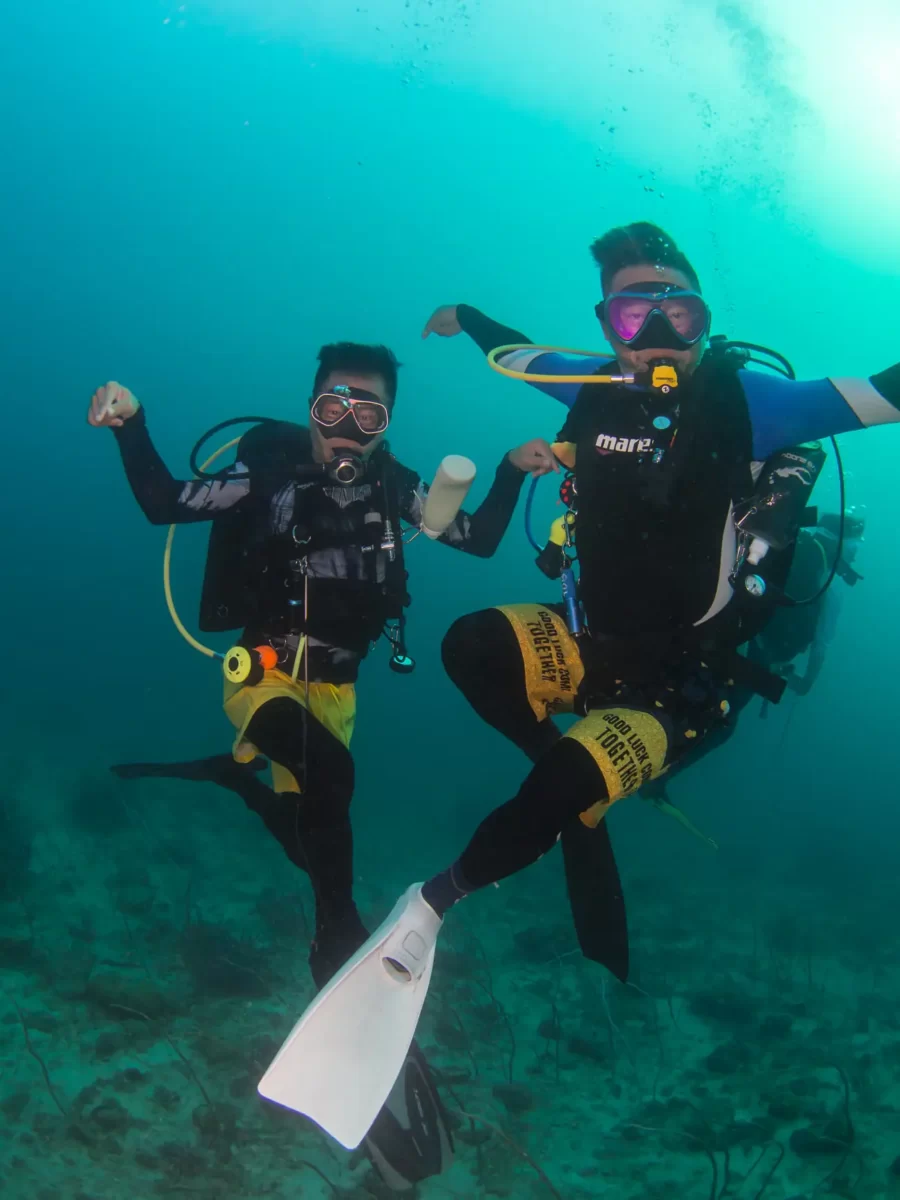
Trim is your physical alignment in the water. A diver in "perfect trim" is horizontal, with knees slightly bent and fins up, reducing their profile and protecting the reef.
- Weight Distribution: Use trim pockets on your BCD or move weights along your belt to prevent your feet from sinking or floating up.
- The "L" Shape: Keeping your legs bent at a 90-degree angle (frog kick position) keeps your fins away from the coral.
- Efficiency: Horizontal trim reduces drag, meaning you use less energy and your air lasts significantly longer.
Ready to Dive Like a Pro?
Mastering buoyancy takes practice, but the rewards are a lifetime of effortless diving. Let our PADI Instructors show you the ropes in Tioman.
Book a Buoyancy Masterclass
